Gifting has never been easier
Perfect if you're short on time or are unable to deliver your gift yourself. Enter your message and select when to send it.

The art of styling a shelf seems simple enough, until you’re in it. Adding layers, removing items, twisting your head to the side to make sure it’s just right. It quickly becomes an exercise in restraint and balance. Introduce a specific category, like a kids’ room, and the process becomes even more considered. You want to incorporate toys they love, books they read, and make sure it’s all accessible and easy to reach.
It’s uniquely personal and always evolving. And whether you’re styling a wall-mounted floating shelf or a colorful free-standing iteration, the same principles apply: start with what matters, edit as you go, and leave room for play. To help with nailing the vibe, we chatted with interior designers Katie Monkhouse of Katie Monkshouse Interiors and Tawni Bannister of Alta Projects to give their intel on how to approach creating a beautiful, bountiful bookshelf for your little one.
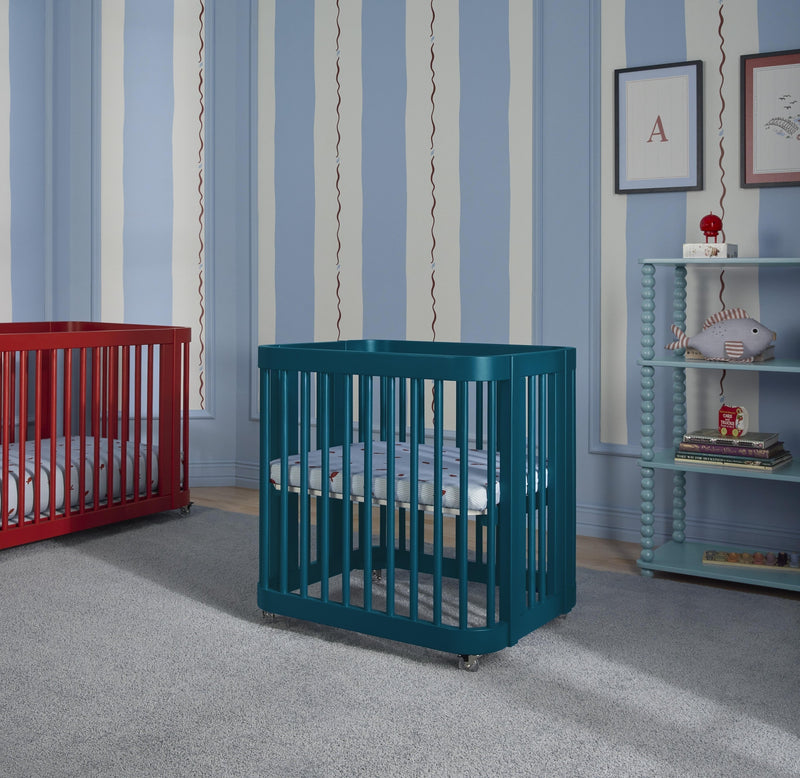
When it comes to shelving in a kids’ space, both designers agree that practicality needs to lead the way. “Storage and easy access to toys and books are important,” Monkhouse notes, which is why she likes to think vertically when styling a freestanding shelf like the Briar Montessori Bookshelf—”designating the bottom shelf for baskets, the middle shelf for books with cute bookends, and the top for a small grouping of favorite toys or a stack of board books.
Bannister takes a similar approach, beginning with what truly needs to live on the shelf every day, then layering decorative objects for visual interest. She often starts with baskets for bins and toys and books and then adds grounding pieces like “a colorful book stack, ceramic or wood bowl, sentimental objects like a framed family photo” to break up repetition. The goal she says, is for the shelf to feel “interesting and effortless, but practical enough to be lived in.”


When mixing heights, textures, and colors, neither designer aims for perfection or symmetry. “We focus on balance instead,” Monkhouse explains, suggesting playful groupings like “two Jellycats of different sizes leaning together, paired with a low catchall for stray Legos on top of a small book stack.” She also emphasizes being realistic about the space. “Styling in a kids’ room is temporary,” she shares. “Things are constantly moving and changing, which means letting go of perfection.”
Bannister thinks about rhythm across the shelf, using a loose triangle approach. “Something tall, something medium, and something horizontal to anchor,” she explains. And then repeating that flow so the shelf feels cohesive. She also looks for a unifying thread, whether it’s a color palette or a shared mood, like calm or playfulness, to keep things from feeling mismatched.


Even in a kid-heavy space, some breathing room matters. “You should always maintain a little negative space,” Monkhouse adds. Sure, that can be tricky in a kids’ room. One of her go-to tricks is using uniform book stacks. “The same series, the same size, the same palette,” she says. For her, the top shelf is where negative space matters the most. Bannister echoes this sentiment, suggesting treating the empty space intentionally rather than a leftover. “Not every shelf needs to be maxed out,” Bannister shares. She recommends leaving one shelf with just a single object or stack so that the eye can rest, especially when darker tones are used.


For functional pieces, both designers gravitate toward storage that adds texture without visual noise. “We always opt for something with good structure, not too soft,” Monkhouse says, favoring materials like water hyacinth or woven materials that feel elevated and age well as kids grow.
Bannister similarly loves woven and textural storage—seagrass, felt, wire—and recommends repeating the same basket style in different sizes. “It feels intentional and tidy,” she explains, “rather than a mix-and-match of random containers.”
When it comes to decorative elements, Monkhouse suggests pulling from items kids already own, but with intention. “The fancier stuffies they’re not deeply attached to” and wooden toys that may not be daily go-tos but look beautiful on display and might even encourage new play.
Bannister rounds things out with personal touches: favorite books, framed photos or kids’ artwork, heirloom toys, even a sculptural plant in a textured pot. “Anything goes,” she says, “as long as it means something special to you.”
Both designers return to the idea of zoning as the key to making shelves work for the whole family. Bannister suggests treating lower shelves as kid territory. Easy-to-reach bins that support independence while reserving upper shelves for more styled moments like framed photos, lamps, or casually leaning art. Monkhouse co-signs, commenting that adding the baskets to the lower shelf encourages play and use.
The result? “A shelf works for both everyday function and serves as a point of beauty and inspiration, as well,” Bannister adds.